Contents
- Clearing up the rumor first
- Which bank first
- 1. Your mainland resident ID card
- 3. A mainland phone number with Hong Kong roaming turned on in advance, able to receive texts in Hong Kong
- 5. An email address and your mainland home address
- 6. Your tax ID number; for mainland tax residents, it’s your ID card number
- What to do once you’re in Hong Kong
- Moving money in and out
- Don’t count on investment features yet
- Don’t do these things
All year people have been saying mainlanders can’t open Hong Kong bank accounts anymore. That’s not accurate. The Hong Kong Monetary Authority’s circular of May 22 covers investment accounts; ordinary accounts for saving, transfers and card payments are outside its scope. Below is the account-opening process I put together from the banks’ websites and the regulator’s own text. If it’s your first time, just prepare along with it.
Clearing up the rumor first
On May 22, the HKMA sent a circular to all banks adding three measures for investment accounts held by mainland individual investors: review investment accounts opened since January 2023 with suspicious or forged documents and close them; close investment accounts that hold no assets and have been inactive for 12 months; and require new investment accounts to declare in writing that the funds come from legitimate sources outside the mainland.
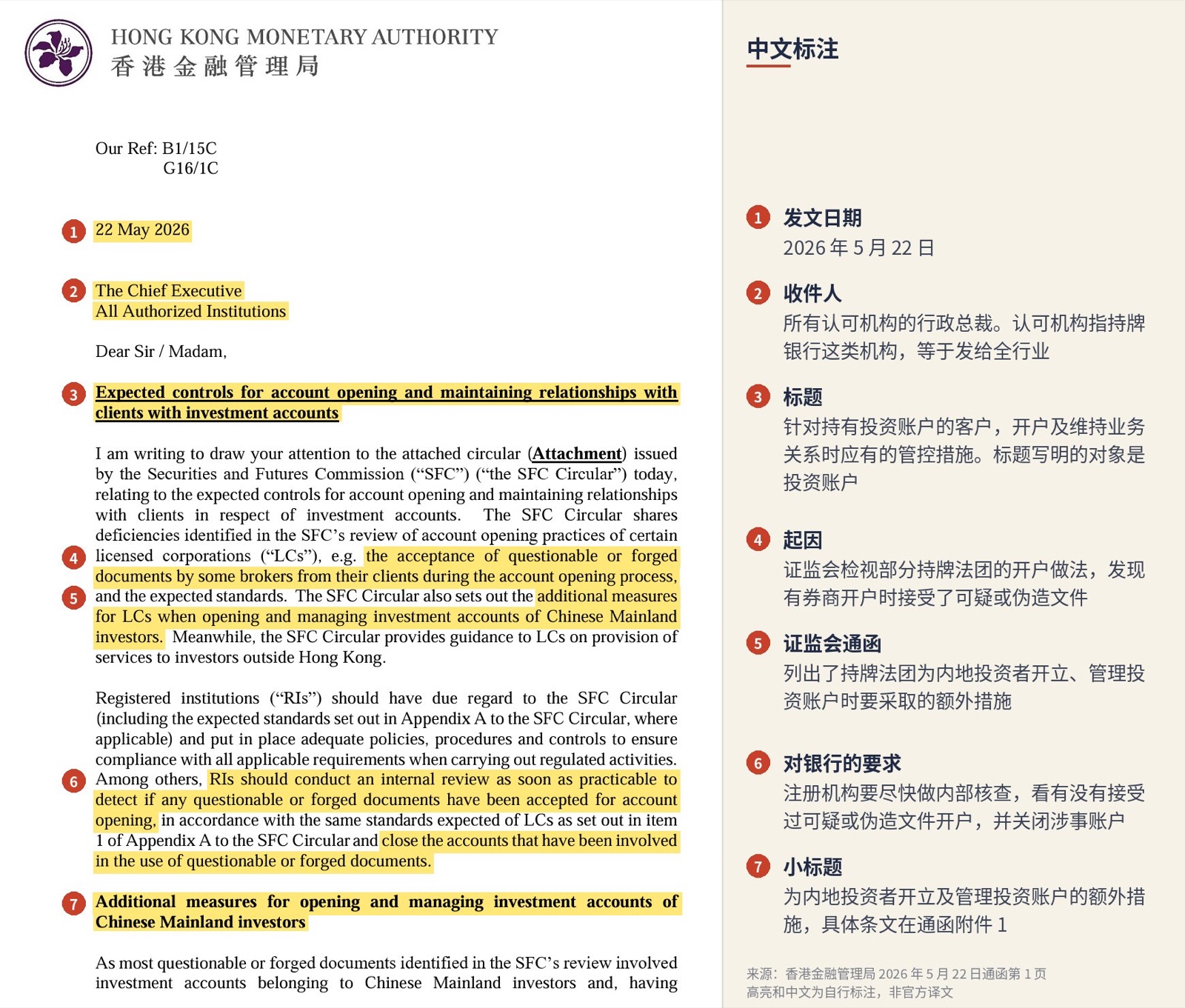
The HKMA’s material for the press is clear that these measures apply only to investment accounts; ordinary savings, time deposits and payment functions are out of scope. On June 6 the HKMA also said publicly that mainland customers continue to apply for accounts and the process is running smoothly overall.
What has actually changed is cost and scrutiny. Starting January 1, 2026, HSBC charges a low-balance fee to newly opened accounts held by non-Hong Kong ID holders: if your HSBC One average total relationship balance over the past three months is under HK$10,000, it deducts HK$100 a month. CNCBI shut online account opening for mainland residents last August, so you can only book a branch appointment.
Which bank first
My advice: make your first account one with no monthly fee that you can open on your phone.
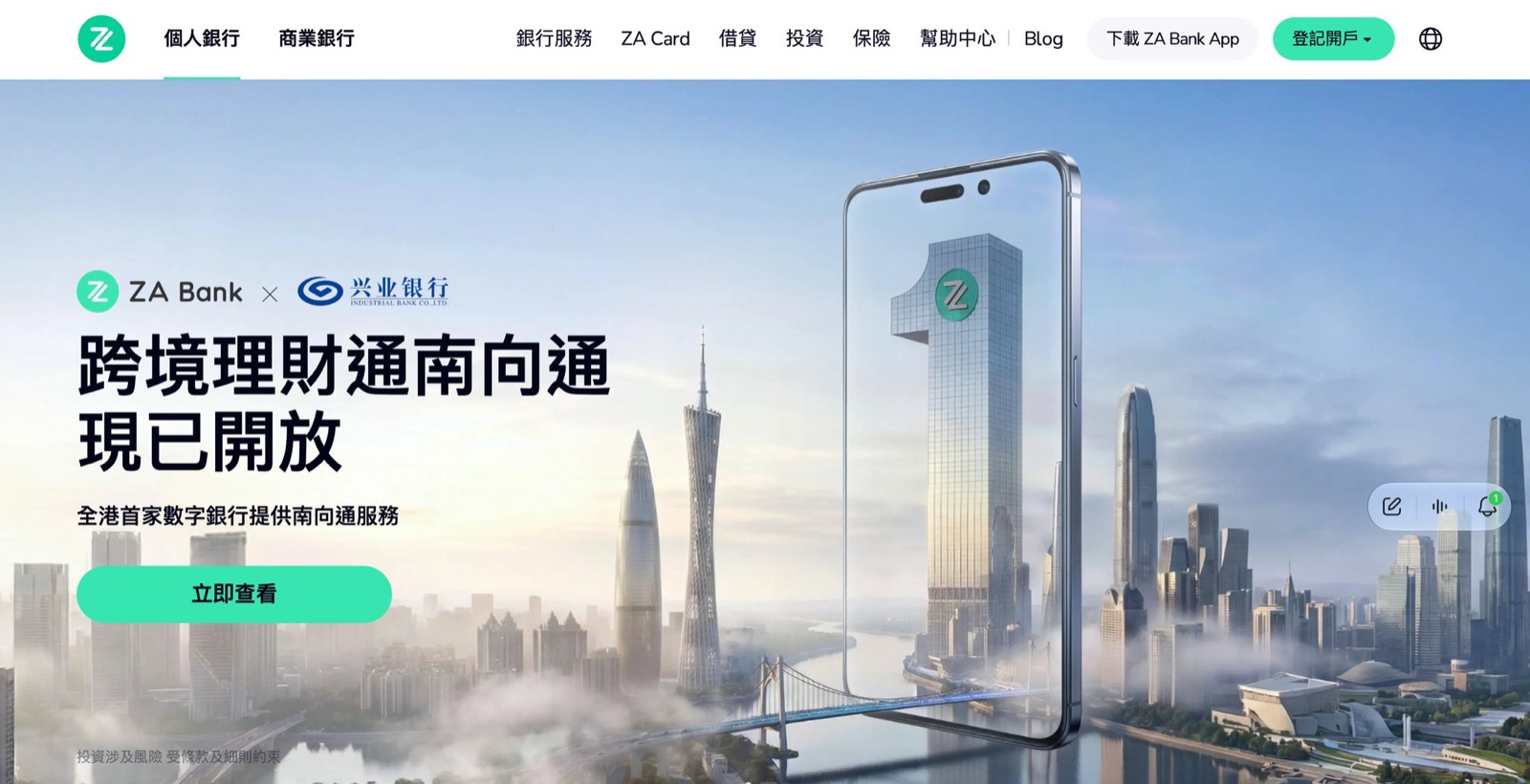
ZA Bank. Its site says there’s no minimum deposit, and both Hong Kong residents and visitors physically in Hong Kong can open an account online, in as little as 2 minutes if your documents are in order. One account holds 11 currencies including HKD, RMB, USD and JPY, and comes with a Visa debit card that supports Apple Pay and Google Pay.
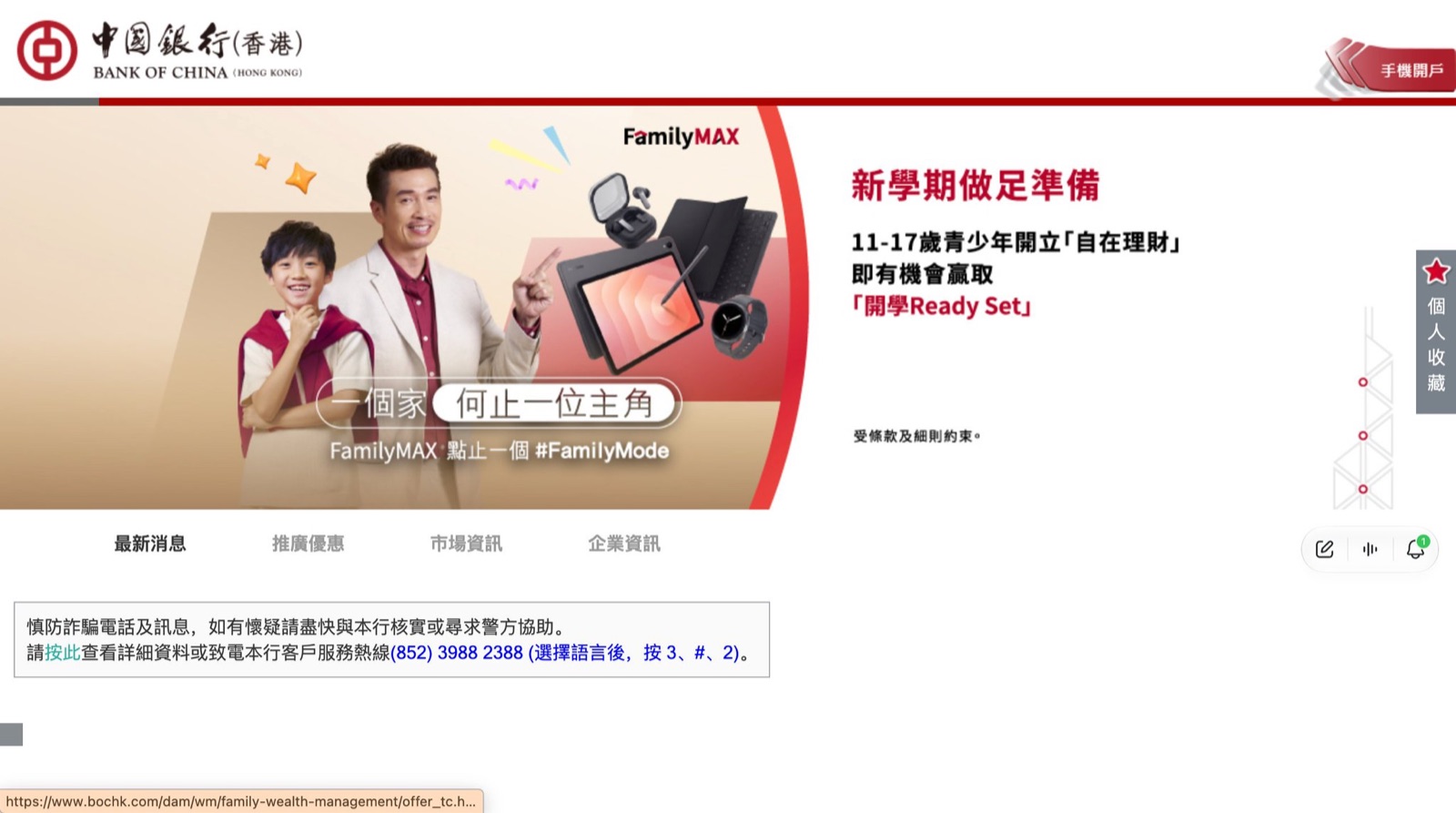
Bank of China (Hong Kong). You can open an account in the mobile app, and its official account-opening guide lists the requirements for mainland ID holders specifically. The same guide says that since August 1, 2019, it has fully waived monthly fees for its integrated account services and annual fees for its cards, and opening a savings account in the app doesn’t require proof of address.
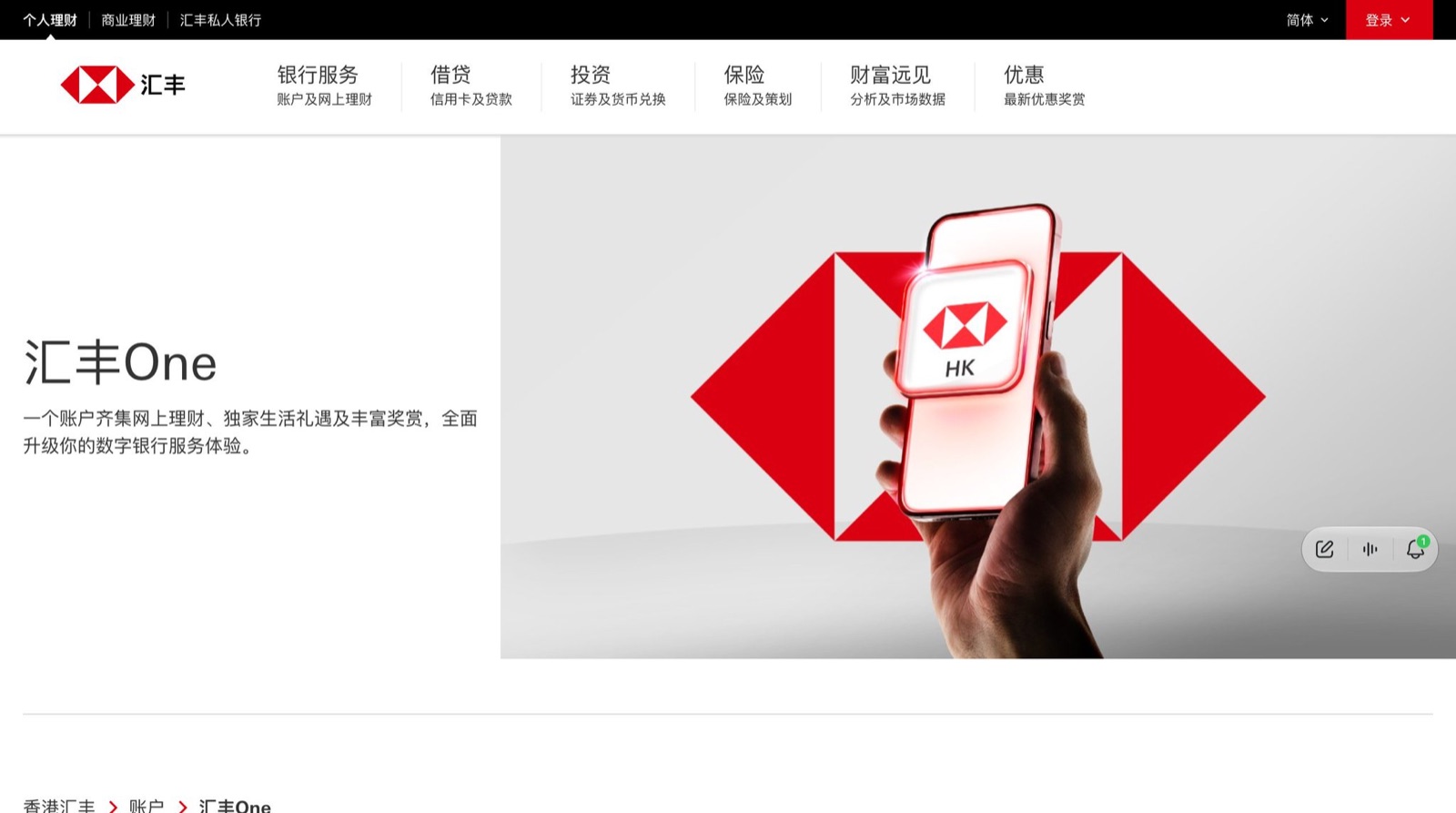
HSBC One is the best known, but under the current fees, if you keep less than HK$10,000 in it you’ll pay HK$1,200 a year, so it’s not a good first account.
Bring these 6 things
1. Your mainland resident ID card
- Your Exit-Entry Permit for Hong Kong and Macao, with an endorsement valid on the day you apply. Both banks require documents valid for at least 30 more days from the application date
3. A mainland phone number with Hong Kong roaming turned on in advance, able to receive texts in Hong Kong
- A mainland bank debit card whose registered phone number matches the one you open the account with; ZA Bank needs this
5. An email address and your mainland home address
6. Your tax ID number; for mainland tax residents, it’s your ID card number
Install both apps before you leave: ZA Bank and BOCHK.
What to do once you’re in Hong Kong
Step 1: cross the border. Enter with your Exit-Entry Permit; both banks’ official requirements say you must be in Hong Kong when you apply. Keep the landing slip you get at immigration in case you need to visit a branch.
Step 2: download your entry and exit records. BOCHK requires an electronic record of entries and exits issued by China’s National Immigration Administration, issued within the 7 days up to and including the application date. Request it in the NIA’s official mini program; today’s entry takes a little while after you cross to show up.
Step 3: apply in the app. With ZA Bank, choose mainland resident ID and turn on location, verify your phone number, photograph your ID and do face verification, fill in your address, occupation, purpose of the account and tax information, then set a username and password. BOCHK is similar, with one extra step to upload your entry and exit records.
Fill everything in truthfully. Don’t copy templates from the internet for your occupation, income or account purpose; suspicious and forged documents are exactly what the HKMA’s review targets.
Step 4: wait for the result. BOCHK’s service hours are 9 a.m. to 8 p.m., Monday to Saturday, excluding public holidays; applications submitted and approved in that window can usually be used right away. New accounts start with a daily transfer limit of HK$10,000, raised to HK$60,000 once the bank finishes reviewing your documents within 3 business days.
Step 5: wait for the card. BOCHK cards are usually mailed within 4 business days and may arrive frozen, typically activated within 5 business days. Its overseas ATM withdrawal limit defaults to 0, so to withdraw cash in the mainland you’ll need to turn it on yourself in mobile banking.
Moving money in and out
To send money to Hong Kong, you can use Cross-boundary Payment Services: transfer directly to your Hong Kong account from a participating bank’s app, arriving in real time, available daily from 7 a.m. to 11 p.m. This uses your annual US$50,000 per-person foreign exchange quota.
Be careful in the other direction. Northbound remittances through Cross-boundary Payment Services are officially for Hong Kong residents, capped at HK$10,000 per person per day and HK$200,000 per year.
There’s also a red line: personal foreign exchange purchases can’t be used to buy property abroad, invest in securities, or buy life insurance or investment-linked insurance with returns or dividends. You’re responsible for the purpose you tick on the purchase form.
Don’t count on investment features yet
Accounts opened with a mainland ID in the BOCHK app can’t open investment accounts; the bank says to visit a branch in person. Add the May circular, and every new investment account now requires signing a source-of-funds declaration; media have reported mainland investors being turned away at the counter. If you just want to save, receive money and pay by card, none of this affects you.
Don’t do these things
Don’t hire an agent to “package” your documents. Under the HKMA’s requirements, an investment account found to have been opened with suspicious or forged documents gets closed, and that person can never again open any investment account with that bank or its affiliates.
Don’t move money through your account for others. Receiving and paying on someone else’s behalf is what banks’ risk controls are most sensitive to.
Don’t open it and forget it. HSBC already charges a low-balance fee, and every bank has policies for long-dormant accounts. If you won’t use it, don’t open it.
The rules have changed several times this year. The above is the early-October version, so check the banks’ websites again before you go. Which bank are you opening first?